

Services and equipment

This section explains the services and equipment you can arrange through your Support at Home funding, and how Local Guardians helps you get them.

Index Everyday services
  1. Everyday services
    1. What services can I arrange through my Support at Home funding?

    2. Can I be reimbursed if I pay for something myself first?
    3. What support is there for hoarding or squalid living conditions?
  2. Medical and nursing items
    1. What nursing care consumables are covered?
    2. How are falls alarms and monitoring subscriptions managed?
  3. Transport and Cabcharge
    1. Using Cabcharge for transport
  4. Assistive technology and home modifications
    1. What is the AT-HM pathway and how does it work?
  5. Equipment how to guides
    1. Equipment guides

SubsectionEveryday services

What services can I arrange through my Support at Home funding?

Help at home with meals and everyday tasks

Your Support at Home funding can pay for a wide range of services that help you stay safe, well and independent at home. These include:

  • Personal care: help with bathing, dressing and grooming.
  • Domestic assistance: help with cleaning, laundry and meal preparation.
  • Nursing care: help with medication management, wound care and other clinical needs.
  • Allied health: services such as physiotherapy, occupational therapy and podiatry.
  • Social support: help getting to appointments, social events and community activities.
  • Home modifications and assistive technology: changes to your home to make it safer, and equipment such as mobility aids and communication devices.

Support at Home funding can’t pay for everyday living costs, large capital items or home renovations. Every purchase must be a reasonable use of government funds and good value for money.

Your care advisor will help you work out which services suit your needs and build them into your care plan and budget.

Can I buy meals?

Yes, but the funding pays for preparing and delivering meals, not the food itself. The industry standard splits the cost like this:

  • 70% covers preparation and delivery, paid from your Support at Home funding.
  • 30% covers ingredients, paid by you.

Meals must be nutritious, appetising and suit your needs and preferences. Meal providers must show a dietitian reviews their menu at least once a year. If they can’t, we can’t fund their meals.

You only need your own dietitian assessment if you have nutrition risks or special dietary needs, or your chosen meal provider doesn’t have dietitian oversight.

These rules don’t apply to meals a support worker cooks for you in your home.

For more detail, see the government’s guidance on in-home meal requirements (PDF).

Can I use my funding for respite care?

Yes, if the respite is delivered in your home to give your carer a break.

You can’t use your funding for respite in a facility, because accommodation of any kind is excluded under Support at Home. If you have a respite code, you may be able to get government funded residential respite instead. Talk to your care advisor.

Can I use my funding for massage or myotherapy?

Myotherapy and most therapeutic services aren’t funded on their own. Remedial massage can be funded, but only when:

  • an accredited therapist delivers it
  • it’s part of a treatment plan prescribed by an allied health professional
  • it treats a decline in your function, not relaxation or general wellbeing.

There must be clear evidence that the massage meets an assessed aged care need and helps you stay safe or independent at home.

Invoices and treatment notes should describe the service as “remedial massage linked to functional goals”. Terms like “relaxation massage” or “wellness treatment” won’t be accepted.

Back to index

Can I be reimbursed if I pay for something myself first?

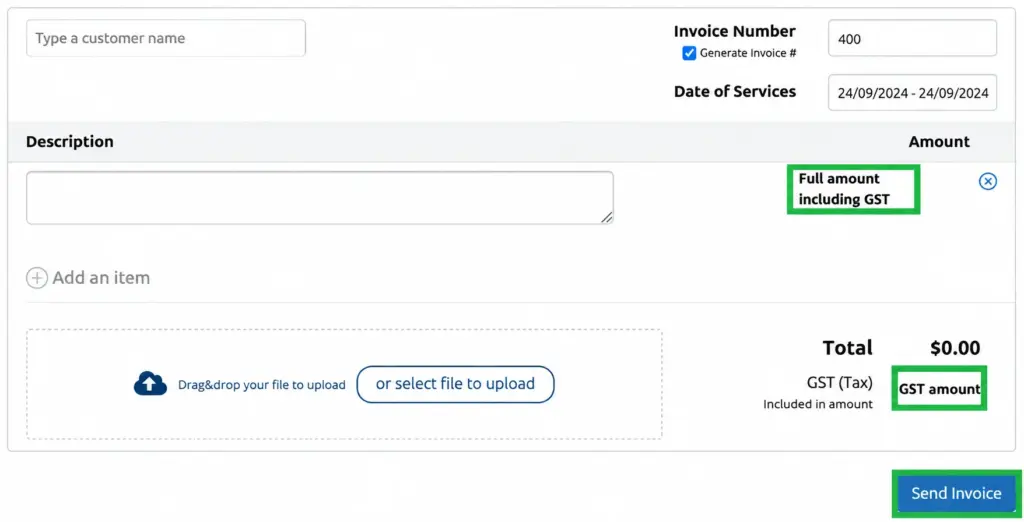
An invoice uploaded for reimbursement

Yes. We can reimburse you for purchases that are approved in your care plan and budget, as long as you have a valid receipt.

Daily limits apply. Talk to your care manager before making a larger purchase.

When reimbursement doesn’t apply

You can’t use reimbursement for carers or services that visit your home regularly. These providers must register with Capital Guardians and upload their compliance documents.

The same applies to allied health. If you visit them at their clinic, you can claim a reimbursement. If they visit you at home, they must register with Capital Guardians.

How to claim

First, request a reimbursement account using our online form.

Once you get a confirmation email:

  • Log in to Capital Guardians at capitalguardians.com.
  • Select the Invoice tile.
  • Enter the amount, a description and the date, then attach your receipt.

What makes a receipt acceptable?

  • It’s issued by a business. A Word document you create yourself isn’t a receipt.
  • It’s in your name. A gift voucher, for example, isn’t accepted because anyone could use it.
  • The item is allowed and included in your care plan.
  • The purchase date falls within your home care agreement dates.
  • No part of the cost has been paid by another scheme, such as Medicare or private health insurance.
  • For prepared meals, we can reimburse up to 70% of the cost.
Back to index

What support is there for hoarding or squalid living conditions?

If you live with hoarding behaviour or in squalid conditions, and this puts you at risk of homelessness or stops you getting the care you need, extra help is available.

The Commonwealth Home Support Program (CHSP) offers hoarding and squalor services. These sit on top of your Support at Home funding.

To get this help, you’ll need a reassessment through My Aged Care. Your care advisor can help you apply.

Back to index

SubsectionMedical and nursing items

What nursing care consumables are covered?

A nurse supporting a client at home

Nursing care consumables are clinical supports. They’re items linked to a specific clinical need, such as prescribed skin creams or oxygen supplies.

There are two types:

  • Everyday items, such as basic bandages and antiseptics. These are included in the nurse’s hourly price, so you don’t pay for them separately.
  • Specialised items that are specific to you and that a nurse wouldn’t normally carry, such as prescribed skin creams or disposable continence aids. These can be funded separately.

To fund specialised items, there must be a treatment plan led by a clinician. It’s recorded in your care plan and budget and reviewed regularly.

If your Notice of Decision includes nursing care consumables, a Local Guardians nurse or relevant clinician will work with you to record your clinical need, set goals, choose the right products and add them to your care plan.

Skin creams

Skin creams can be funded when they’re a specialised product linked to a skin integrity need. The Support at Home Program Manual gives “prescribed skin emollients for management of skin integrity” as an example.

If you moved across from a Home Care Package, we need a clinical assessment in your care plan that links the cream to an assessed need and goal. We review this at least once a year.

Wound dressings and wound care

Wound care is part of nursing clinical support. Basic bandages and antiseptics are included in the nurse’s hourly price. Specialised wound products can be funded when they’re clinically needed.

For specialised dressings, we need a wound treatment plan from a wound care nurse, GP or specialist. It must set out the clinical need, goals and recommended products. We add it to your care plan and review it at each care plan review.

Continence aids

Continence aids such as pads and pull ups can be funded as nursing care consumables if:

  • your Notice of Decision includes nursing care consumables, and
  • a nurse confirms your clinical need and the right product type in your care plan.

Continence aids funded this way are fully paid by the government. You don’t pay a contribution.

If you moved across from a Home Care Package and haven’t been reassessed yet, you can usually still get these products, as long as your clinical need is recorded in your care plan.

Webster packs and dose administration aids

Generally, no. Webster packs and other dose administration aids are subsidised through other programs, alongside your medicines, so Support at Home doesn’t fund them.

We can still help with medication management. For example, your care advisor or support worker can help you talk to your pharmacy or arrange delivery and collection.

Back to index

How are falls alarms and monitoring subscriptions managed?

Can I get a falls alarm?

Yes. We can fund a falls alarm when you need it for your safety and it’s in your support plan. You’ll need:

  • an assessment showing you need the alarm, and
  • a prescription from a qualified health professional.

Does it come out of my quarterly budget?

No. Falls alarms are paid from your separate assistive technology funding, not your quarterly services budget. Any ongoing monitoring fee, sometimes called a subscription, is paid from the same assistive technology funding.

Any fee must be written into your service agreement and budget, and you must agree to it before it starts.

Do I pay anything?

You may pay a contribution towards the alarm. Services Australia works out the amount based on your financial assessment.

You don’t pay a contribution for the clinical assessment or prescription.

Local Guardians charges 10% on the assessment and prescription invoice, up to a maximum of $500.

Why do I need a new falls assessment to keep my subscription?

Before we approve or renew a monitoring subscription, we may ask for an updated falls risk assessment. This makes sure the alarm still meets your needs.

We usually do this during your regular care plan review. We’ll do it sooner if things change, for example after a fall, a hospital stay, or a change in your mobility, memory or informal supports. Your care advisor will guide you through it.

What if I have unspent Home Care Package funds?

We use your unspent Home Care Package funds first to pay for the alarm and any agreed ongoing fees. Your new assistive technology funding is only used after that.

Can I get a smartwatch with fall detection?

Sometimes. We only consider a smartwatch when it’s clearly needed for your safety and approved in your support plan. Ongoing phone plans or data fees usually aren’t covered unless they’re part of an approved safety service.

Back to index

SubsectionTransport and Cabcharge

Using Cabcharge for transport

Getting out to community activities

What is a Cabcharge card?

A Cabcharge card pays for taxis and other transport. The fare goes straight onto the card, so you don’t need cash or to pay the driver.

When can I use it?

You can use your Cabcharge card when family or friends can’t take you, for example to medical appointments or community activities.

Only you can use the card, and only for trips that benefit you. All spending must stay within your budget. You pay for any use outside your budget yourself.

How do I order one?

Order a Cabcharge card using our online form.

Order a Cabcharge card

Can I use Cabcharge with the half price taxi scheme?

No. Both are government schemes, so you can only use one at a time.

The half price taxi scheme gives eligible passengers 50% off taxi fares. It’s only available in some states and territories. Check with your local transport authority to see if you’re eligible.

How do I cancel my card?

You can cancel your card in any of these ways:

  • Online through Cabcharge: Cabcharge card management. Enter your contact details. Where it asks for a card number, enter the name on the card if you don’t have the number.
  • By phone: call the Cabcharge contact centre on 1800 652 229.
  • Through us: if you’re a Local Guardians client, report your card for cancellation using our online form
Back to index

SubsectionAssistive technology and home modifications

What is the AT-HM pathway and how does it work?

What is AT-HM?

The Assistive Technology and Home Modifications scheme (AT-HM) is part of Support at Home. It gives you separate funds for equipment and home changes, so you don’t need to save from your quarterly budget.

What can it pay for?

  • Assistive technology: equipment that helps you stay independent, such as mobility aids, bathing equipment and memory supports.
  • Home modifications: changes to your home and related costs, such as planning, building and trade work, installation and council fees.
  • Prescription and support services from qualified health professionals, where needed.
  • Repairs and maintenance for eligible equipment bought through the scheme.

Do I pay a contribution?

For equipment and home modification items, you may pay a contribution at the same rate as the independence category.

Prescriptions and related clinical services are fully funded by the government. You don’t pay a contribution for these.

How much funding is there, and how long do I have to use it?

Equipment and home modifications are funded separately, based on your assessed need. Each has three tiers:

  • Low: up to $500.
  • Medium: up to $2,000.
  • High: up to $15,000.

Funding is usually available for 12 months. You must spend it, not just commit it, within that time. Your provider then has 60 days to finalise claims. After that, the funds are no longer available. Funding doesn’t roll over.

Some exceptions apply:

  • High tier equipment can go above $15,000 with evidence, through a separate process.
  • Equipment for progressive conditions may have a 24 month period, which can be extended to 48 months.
  • High tier home modifications are capped at $15,000 for your lifetime. For complex work, the period can be extended to 24 months if you show progress. Any unspent amount can be used in a later high tier allocation after assessment.

What can providers charge?

  • Equipment administration fee: covers sourcing, quotes, ordering, paying suppliers and arranging delivery. The cap is 10% of the item cost or $500, whichever is lower.
  • Home modification coordination fee: covers managing quotes and invoices, scheduling work, permits and installation. The cap is 15% of the total quoted cost or $1,500, whichever is lower.

How do I get AT-HM funding?

You need an aged care assessment that gives you a funding tier for equipment, home modifications or both. Your care advisor then records your needs, goals and preferences in your care plan and builds an itemised budget with you.

Your budget shows the cost of each item, your contribution and any provider fees. We can’t charge more than the invoiced cost plus the agreed fees. If a price changes, we’ll ask for your agreement in writing.

For home modifications, we need written consent from the homeowner (if that’s not you) and quotes that clearly set out the work and costs.

Do I need an occupational therapist assessment first?

Yes, in most cases. An occupational therapist (OT) looks at your needs, abilities and home, then recommends the right equipment for you. They also show you how to use it safely.

The wrong equipment can cause injury or make a condition worse, so this step matters. For some equipment, a physiotherapist or registered nurse can make the recommendation instead.

Can I buy second hand equipment?

Yes, but extra checks apply to make sure it’s safe and suitable:

  • An OT must assess and trial the item and provide photos.
  • The item must be serviceable, with parts available locally.
  • Any servicing cost must be included in the Allowable Query Form.
  • You must pay by bank transfer. We can’t accept cash payments.
  • The receipt must show the date, seller and buyer details, address, make, model and age of the item, the full amount paid and a nil balance.

Can I hire equipment instead of buying it?

Yes. Hired equipment is paid from your AT-HM funding, not your quarterly budget.

If you don’t have enough AT-HM funding, we can send a Funding Application Form with evidence of your need to My Aged Care. We can also request a Support Plan Review to increase your funding tier.

For providers: invoice hire using the Services Australia code that matches the type of equipment. There’s no separate hire code.

  • Mobility items such as wheelchairs, walkers, shower chairs, bed poles and transfer aids: SERV-0063 Mobility products.
  • Continence, toileting, showering, dressing and personal care equipment: SERV-0062 Self care products.
  • Household items: SERV-0064 Domestic life products.
  • Communication, alert, tracking and information devices: SERV-0065 Communication and information management products.
  • Pressure care, positioning, breathing and body support products: SERV-0061 Managing body functions.
  • Prescription, assessment or set up by a clinician: SERV-0066 Assistive technology prescription and clinical support.

How long does equipment approval take?

Most equipment is approved within 1 to 2 business days once we have all the paperwork. Some specialised items, such as electric wheelchairs and mechanical car lifters, take up to 5 business days.

Most items need a recommendation from the right professional, working within their scope of practice:

  • Mobility equipment, such as wheelchairs, walkers and beds: usually an OT or physiotherapist.
  • Personal care equipment, such as bathroom aids, continence aids, breathing devices and compression aids: usually a nurse, therapist or doctor.
  • Home modifications, such as handrails and ramps: usually an OT.

Many items also need your care plan and budget. Simple items, such as adaptive cutlery and easy turn taps, don’t need any paperwork.

Back to index

SubsectionEquipment how to guides

Equipment guides

Back to index
Still have a question?

Talk to your local Care Advisor. Call the number for your state or email customer@localguardians.com